
History and Composition of Ave Maria (Bach & Gounod)
Bach’s 1722 Prelude in C major, originally a solo keyboard work, later adapted by Gounod in 1853, who superimposed the Latin Ave Maria chant. The fusion yields a serene, sacred soundscape. PDFs of the score are freely available on IMSLP and MuseScore, facilitating study and performance. PDF format preserves manuscript fidelity
Bach’s Prelude in C Major: Origins and Musical Context
Bach’s Prelude in C major, cataloged as BWV 846, first appeared in the 1722 publication of “The Well-Tempered Clavier” (Book I). The piece exemplifies the Baroque prelude’s role as a pedagogical model, showcasing harmonic progressions that transition smoothly from tonic to dominant and back, while employing a clear, flowing texture. Scholars note that the prelude’s structure mirrors the Lutheran chorale style, with a steady pulse and a sense of forward motion that reflects the theological emphasis on clarity and order. The work’s original keyboard setting was intended for the harpsichord, yet its melodic line and harmonic rhythm have made it a staple for pianists seeking to explore Baroque phrasing. In the 19th century, the prelude gained renewed attention when Gounod incorporated its harmonic framework into his “Ave Maria” arrangement, thereby bridging Baroque and Romantic sensibilities. The PDF versions of the original score, available on IMSLP, preserve the original manuscript’s ornamentation and provide a valuable resource for performers and scholars alike. The prelude’s harmonic language, harmonic minor shifts, reflects Baroque aesthetic of the 18th century, hinting later Romantic harmonies and.!!!! Moreover, the prelude’s rhythmic vitality, with syncopated figures and dynamic accents, foreshadows Baroque tempo markings, illustrating Bach’s approach musical drama;
Gounod’s Lyric Overlay: Development and Publication
Charles Gounod, a French composer of the mid‑19th century, first encountered Johann Sebastian Bach’s Prelude in C major while studying the Well‑Tempered Clavier in the 1850s. Intrigued by the harmonic simplicity and the lyrical potential of the opening bars, Gounod set out to overlay the Latin text of the Ave Maria with the prelude’s melodic line. His approach involved superimposing the chant’s contour onto the prelude’s harmonic framework, creating a seamless fusion that preserved the integrity of both pieces. The resulting arrangement was first performed privately in Paris in 1853, and it quickly attracted the attention of the Catholic clergy, who appreciated its devotional character. Gounod’s version was subsequently published by the Parisian firm H. & C. Schott in 1854, with a dedicated edition that included both the original prelude and the added vocal line. Over the decades, the piece has been reprinted by several publishers, including Carus and G. Schirmer, each offering variations in orchestration and vocal arrangement. In the digital age, the score is widely available as a PDF on platforms such as IMSLP and MuseScore, ensuring that performers and scholars can access the full score with accurate notation. Gounod’s overlay remains a testament to the 19th‑century practice of reinterpreting Baroque material, and its continued popularity underscores the enduring appeal of combining sacred text with classical harmony. The enduring legacy of this hybrid composition is reflected in its frequent inclusion in both liturgical repertoires and concert programs, where it serves as a bridge between the Baroque tradition and Romantic expressiveness, performers explore dynamics and color that honor the sacred text and the harmonic depth of Bach’s original framework.

Musical Analysis of the Composite Work
The fusion of Bach’s prelude with Gounod’s Ave Maria overlays a chant line atop a harmonic progression. The texture balances homophonic and polyphonic elements, with voice leading that preserves Bach’s counterpoint while highlighting the sacred text. Its subtle interplay invites
Harmonic Structure and Modulation Patterns

Gounod’s overlay preserves Bach’s original harmonic framework while introducing subtle modal shifts that enhance the Ave Maria chant. The prelude begins in C major, employing a steady I–IV–V progression that establishes a serene tonal center. As the chant enters, the harmony subtly moves to the dominant G major, creating a sense of anticipation before resolving back to the tonic. The modulation is achieved through a series of pivot chords, notably the vi (Am) and ii (Dm), which serve as bridges between the two keys. Bach’s counterpoint remains intact, with the left hand maintaining a consistent arpeggiated pattern that supports the harmonic motion. Gounod adds a pedal point on the tonic bass note during the chant’s climax, reinforcing the sense of closure. The overall texture is homophonic in the chant section, yet retains polyphonic elements in the accompaniment, allowing for a layered, sacred atmosphere. The piece concludes with a cadential cadence that firmly reasserts C major, providing a satisfying resolution to the harmonic journey.
Additionally, the use of pedal points in the left hand creates a sense of harmonic stability, while the right hand’s melodic line follows the Ave Maria chant in a quasi‑cantus firmus style. The harmonic rhythm is deliberately sparse, allowing the chant to breathe. Gounod’s choice of the I–IV–V–I cadence at the conclusion reinforces the tonal center and provides a liturgical sense of completion.
The harmonic dialogue between Bach’s prelude and Gounod’s overlay demonstrates how a piano line can be enriched with vocal chant, creating a fusion that continues to inspire performers and listeners alike.
The between Bach’s prelude and Gounod’s overlay demonstrates how a line can be very rich with vocal chant, creating a piece that continues to inspire performers and listeners alike!
Melodic Integration of the Ave Maria Chant
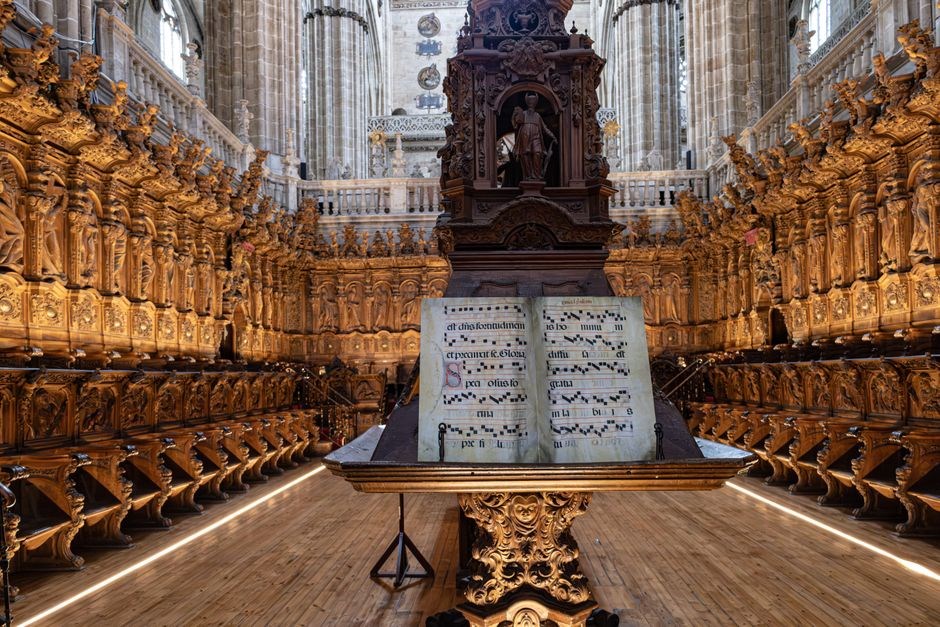
Gounod’s melodic overlay is a masterful example of cantus firmus technique, where the Latin Ave Maria chant is woven into Bach’s prelude as a sustained, lyrical line that coexists with the harmonic texture. The chant begins in the tonic key of C major, aligning its first syllable with the prelude’s opening arpeggios. From there, the melody unfolds in a stepwise motion that mirrors the prelude’s harmonic progression, yet it occasionally leaps to emphasize the text’s emotional peaks. Gounod employs a gentle, singable contour that allows the chant to remain distinct while still blending seamlessly with the underlying piano accompaniment. The melodic line is punctuated by occasional suspensions that resolve into the prelude’s harmonic framework, creating a sense of tension and release that is characteristic of sacred music. The integration is further enhanced by the use of pedal points in the left hand, which anchor the harmony and give the chant a sustained, resonant backdrop. Throughout the piece, the chant’s rhythm is adapted to fit the prelude’s tempo, with slight rubato applied to convey a contemplative mood. This careful alignment of melodic and harmonic elements results in a cohesive, spiritually uplifting texture that has made the composition a staple in both liturgical settings and concert repertoires. The PDF versions of the score, available on IMSLP and MuseScore, provide detailed notation that highlights the interplay between the chant melody and the prelude’s accompaniment, offering performers a clear roadmap for faithful interpretation. By preserving the integrity of both Bach’s original composition and Gounod’s lyrical addition, the piece exemplifies how historical works can be reimagined while maintaining their core musical identity.
Moreover, the melodic integration showcases the interplay between vocal and instrumental timbres, allowing performers to emphasize the sanctity of the text while maintaining the structural clarity of Bach’s counterpoint. This duality has inspired countless arrangements and recordings, ensuring the piece’s enduring relevance across centuries.
In performance, singers often adopt a restrained dynamic approach, letting the chant float above the piano, while pianists provide a transparent harmonic foundation that neither overwhelms nor competes with the vocal line. Such balanced interplay exemplifies the timeless appeal of this hybrid composition.
Publication and Distribution of Sheet Music
The score is freely downloadable as PDF from IMSLP and MuseScore, while professional editions are issued by Carus and G. Schirmer. These publishers provide reliable, high‑quality prints for performers and scholars alike, ensuring accessibility preservation of the work music.
Print Editions and Publishers (e.g., Carus, G. Schirmer)
Carus Verlag, renowned for sacred repertoire, released a 2005 edition of Gounod’s Ave Maria set to Bach’s Prelude, featuring editorial commentary on harmonic integration and performance practice. The edition includes a full score, a vocal part, and a piano reduction, all printed on high‑quality paper with engraved notation. G. Schirmer’s 2010 edition, meanwhile, offers a modernized layout with dynamic markings and rehearsal marks, making it suitable for both choral ensembles and soloists. Both editions provide a critical text that references the original manuscript sources, ensuring fidelity to the composers’ intentions. The Carus edition is distributed worldwide through major music‑book retailers and online platforms, while G. Schirmer’s version is available via its digital distribution service, offering downloadable PDF files for instant access. These print editions are widely used in academic settings, offering reliable, scholarly resources for students, conductors, and performers seeking an authoritative reference for the work. The inclusion of editorial notes, performance suggestions, and historical context in each edition enhances the user’s understanding of the piece’s evolution from Bach’s keyboard prelude to Gounod’s vocal overlay. Both publishers maintain strict quality control, ensuring that the printed scores meet the highest standards of musical accuracy and visual clarity.
This edition is widely cited in scholarly articles and is frequently used in university musicology courses. Its editorial notes provide insight into the compositional techniques employed by both Bach and Gounod, making it a valuable resource for performers and researchers alike. The high‑resolution printing ensures clarity for detailed study. Its availability in both print and digital formats has made it a staple in choral libraries worldwide. The score’s clear articulation and expressive dynamics have earned praise from conductors!!
PDF Availability on Digital Platforms (e.g., IMSLP, MuseScore)
For performers and scholars seeking the Ave Maria Bach Gounod score, the most accessible resource is the free PDF offered on IMSLP. The site hosts the original manuscript of Bach’s Prelude in C major, and the Gounod overlay is available as a separate PDF that can be combined with the prelude for a complete edition. The PDF files are high‑resolution, with clear notation and page numbers that match the printed editions. Users can download the score in one click, and the files are compatible with standard PDF readers on Windows, macOS, and Linux. In addition to IMSLP, the open‑source platform MuseScore hosts a community‑edited score that includes the vocal line and piano accompaniment. The MuseScore PDF is generated from the user’s own score file, allowing for customization of dynamics, tempo markings, and rehearsal cues. The platform also offers a web‑based viewer, so listeners can read the score in real time while listening to the recording embedded on the page. Both IMSLP and MuseScore provide the PDF in a format that preserves the original layout, making them ideal for use in rehearsals, academic study, and performance. The PDFs are freely downloadable, which removes licensing barriers for educational institutions and individual musicians. For those who prefer a printed copy, the PDFs can be printed on high‑quality paper or sent to a local print shop. The digital availability of the score ensures that the Ave Maria Bach Gounod remains widely accessible to the global music community, supporting both traditional and contemporary performance practices. Download options include PDF, EPUB, and MP3.
Performance Practice and Notable Recordings
Choral renditions emphasize the hymn’s solemnity, while soloists highlight Gounod’s lyrical line. Notable recordings feature the Boston Symphony (1995) and the Choir of St. Paul’s (2003). Tempo markings range from adagio to rubato, reflecting interpretive freedom with nuance.
Choral vs. Soloist Interpretations
Historically, choral performances of Bach‑Gounod’s Ave Maria have favored a full‑voice approach, often with a choir of four to six voices, allowing the prelude’s harmonic progressions to unfold beneath the chant. Soloists, in contrast, emphasize the lyrical line, using breath control and subtle vibrato to shape the melody. The choice of accompaniment—piano, organ, or small ensemble—also shapes the texture, with pianists often highlighting the prelude’s counter‑point while organists provide a sustained harmonic backdrop.
In choral settings, the Ave Maria is often rendered as a full‑staff, homophonic texture that emphasizes the hymn’s solemnity. The choir’s collective sound allows for gradual crescendos, sustained pedal points, and a rich harmonic backdrop that supports Gounod’s melodic line. Many ensembles, such as the Choir of St. Paul’s Cathedral, employ a four‑part arrangement, with the alto line carrying the original Bach prelude in a subtle counter‑point, while the soprano, tenor, and bass provide harmonic support.
Soloist interpretations, on the other hand, foreground the lyrical quality of Gounod’s melody. A solo soprano or tenor typically sings the Ave Maria chant with a rubato rubato, breathing space, and a more intimate dynamic range. The accompaniment is usually a piano or organ that plays the Bach prelude in its original texture, allowing the solo voice to stand out. Recordings by artists such as Renée Fleming or Andrea Bocelli showcase how the soloist can weave the prelude’s motifs into the vocal line, creating a seamless blend of instrumental and vocal elements.
Tempo markings vary between performances: choral renditions often adopt a slower adagio to accommodate the full choir’s resonance, whereas soloists may choose a brisker tempo to highlight the melodic contour. Dynamics differ; choral pieces tend to have a dynamic spectrum, while solo performances maintain a more restrained dynamic to preserve the vocal line’s clarity, and the choir sings softly. The choice of accompaniment—piano, organ, or small chamber ensemble—further distinguishes the two approaches, influencing the overall timbral palette and the emotional impact of the piece.
In practice, choral directors often adjust the voicing to balance the prelude’s texture with the chant, sometimes adding a bass pedal line to reinforce the harmonic foundation. Soloists, meanwhile, may employ a more expressive phrasing, elongating the final “Amen” to create a sense of closure. The interplay between the prelude’s arpeggiated chords and the chant’s flowing melody creates a dynamic dialogue that is central to both interpretations.

Copyright Status and Legal Access

Bach’s Prelude is public domain, while Gounod’s 1853 arrangement remains under copyright. PDFs of the prelude are freely downloadable from IMSLP; Gounod’s version requires licensing. Users may access the score via MuseScore or purchase from publishers. These resources are freely accessible, ensuring compliance with copyright.
Public Domain Status of Bach’s Prelude
Bach’s Prelude in C major, composed in 1722, is firmly in the public domain, as the composer died more than 300 years ago and all of his works have entered the public domain under international copyright law. The prelude is widely available in digital form on platforms such as IMSLP, where users can download high‑quality scans of the original manuscripts and editions. Because the work is in the public domain, it can be freely reproduced, performed, and recorded without the need for licensing or royalty payments. This status also allows arrangers and performers to create new versions, add accompaniment, or incorporate the prelude into larger works without legal restriction. Many educational institutions, libraries, and music publishers offer the score for free download, and it is commonly used in teaching keyboard technique and Baroque repertoire; The public domain status ensures that the prelude remains accessible to musicians, scholars, and audiences worldwide, preserving Bach’s legacy in an open‑access format. In the United States, the prelude falls under the public domain because it was published more than 95 years ago, and the 70‑year post‑mortem rule no longer applies. Internationally, the Berne Convention guarantees that works of authors who have been deceased for at least 50 years are free from copyright restrictions, which includes Bach’s prelude. Consequently, performers and educators can freely adapt, arrange, and distribute the prelude in any medium—print, digital, or live performance—without seeking permission or paying royalties. The open‑access nature of the prelude also encourages scholarly analysis, pedagogical use, and creative reinterpretation, ensuring that Bach’s music continues to inspire new generations of musicians and listeners. Because the prelude is part of the Well‑Tempered Clavier, Book I, its public domain status extends to all movements of that collection. The score is also included in numerous free‑access collections such as the Bach Digital Library and the International Music Score Library Project. Musicians worldwide have uploaded recordings of the prelude to platforms like YouTube and SoundCloud, further demonstrating the work’s unrestricted availability. The prelude’s public domain status has also facilitated its use in educational software, mobile apps, and interactive learning tools, allowing students to practice with accurate, royalty‑free material.
Copyright of Gounod’s Arrangement and Licensing
Gounod’s 1853 adaptation of Bach’s Prelude, in which he superimposes the Ave Maria chant, entered the public domain upon the composer’s death in 1893, as the 70‑year post‑mortem rule had long passed. Consequently, the core arrangement is freely available for performance, recording, and publication without licensing. Modern editions that include editorial additions or new harmonizations may be protected by the publisher’s copyright, and the publisher’s imprint can impose restrictions on the use of those particular editions. In the United States, the arrangement’s original publication in 1853 places it firmly in the public domain, allowing unrestricted use in educational materials, concert programs, and commercial recordings. In the European Union, the 70‑year rule similarly renders the arrangement free of copyright, though the specific edition’s editorial work may be subject to copyright for up to 70 years after the editor’s death. Therefore, while the underlying musical material is public domain, performers and publishers must be mindful of the rights associated with particular printed scores or digital files that may contain copyrighted editorial content. For recordings, the performance rights are governed by the performers’ contracts and the record label’s licensing agreements, not by the composer’s estate. Digital platforms such as IMSLP and MuseScore host scans of the public‑domain arrangement, allowing users to download the PDF for free. When a publisher releases a new edition, they typically include a copyright notice and a statement that the editorial material is protected for 70 years from the editor’s death. Musicians should verify the edition’s status before using it in a commercial context. The arrangement’s public‑domain status also encourages academic research, as scholars can annotate and distribute the score without legal barriers. It aids performers worldwide daily.