The Pit Card Game is a fast-paced commodities trading game where players aim to corner the market by collecting and trading cards. It’s a classic, strategic, and social experience loved by families and experienced players alike, offering quick rounds and exciting gameplay.
1.1 What is the Pit Card Game?
The Pit Card Game is a dynamic commodities trading game where players aim to corner the market by collecting and trading specific commodity cards. The game involves strategic planning, quick thinking, and effective card management. Players use a trading bell to initiate trades, and the objective is to collect all cards of one commodity, such as Barley, Corn, or Flax. The game emphasizes social interaction and strategy, making it appealing to a wide range of players. It’s designed for multiple players and offers a competitive and engaging experience.
1.2 Brief History of the Game
The Pit Card Game has a rich history, dating back to the early 20th century. It was created by Edwin S. Lowe, a renowned game developer, and quickly gained popularity in the 1900s. The game became a staple in many households and social gatherings due to its fast-paced and strategic nature. Over the years, it has remained a beloved classic, with its simple yet engaging gameplay continuing to attract players of all ages. Its enduring appeal lies in its ability to combine luck, strategy, and social interaction in a fun and competitive environment.
1.3 Popularity and Why It’s Loved
The Pit Card Game has remained a beloved classic due to its unique blend of strategy, luck, and social interaction. Its fast-paced nature makes it accessible to players of all ages and skill levels. The game’s simplicity, combined with the excitement of trading and cornering markets, creates an engaging experience. Players appreciate the quick rounds, allowing for multiple plays in a single session. Its ability to foster both competition and camaraderie has made it a staple in many households and casual gatherings, ensuring its enduring popularity over the years.

Setup and Initial Preparations
Prepare the deck by removing Bull and Bear cards for a basic game, place the trading bell centrally, shuffle the cards, and ensure the correct number of players.
2.1 Gathering the Materials
To play Pit, you’ll need a standard deck of Pit cards, including Bull and Bear cards, a trading bell, and a flat surface for gameplay. The deck consists of commodities like wheat, corn, and oats, with each commodity represented by multiple cards. Ensure the bell is placed centrally for all players to access. The number of players typically ranges from 3 to 8, so gather enough chairs and space accordingly. Remove Bull and Bear cards for a basic game to simplify trading dynamics.
2.2 Understanding the Deck Composition
The Pit deck includes 75 cards, featuring commodities such as wheat, corn, oats, barley, flax, hay, and rye. Each commodity has multiple cards, with values ranging from 1 to 5, reflecting their market presence. Two Bull cards and two Bear cards are also included, influencing market dynamics. The deck is designed to simulate trading fluctuations, making each commodity’s value variable. This composition ensures balanced gameplay, allowing strategic trading and market cornering opportunities. Understanding card distribution is key to mastering the game’s trading mechanics and strategies.
2.3 Determining the Number of Players
The Pit Card Game is designed for 3 to 8 players, making it flexible for various group sizes. The number of players determines the number of commodities in play, with each player representing a potential trader. More players increase the game’s chaos and competition, while fewer players allow for more strategic control. The basic game recommends starting with fewer players for simplicity, ensuring everyone can actively participate. This flexibility makes Pit accessible to diverse gatherings, from small family games to larger social events.
Objective of the Game
The objective is to corner the market on specific commodities like barley, corn, and wheat by collecting all cards of one type through strategic trading and negotiation.
3.1 Cornering the Market
Cornering the market in Pit involves collecting all the cards of one specific commodity, such as barley or wheat. The goal is to be the first player to gather every card of a single type, allowing you to declare a “corner” and win the round. This requires strategic trading and negotiation with other players to acquire the necessary cards. The trading bell is crucial, as it signals when players can begin exchanging cards to complete their sets. Success hinges on quick thinking and effective bargaining to outmaneuver opponents.
3.2 Understanding the Trading Mechanic
In Pit, trading is the core mechanic that drives the game. Players exchange cards with one another to collect sets of the same commodity; The trading bell signals the start of trading rounds, allowing players to negotiate and swap cards. Effective communication and strategic offers are key to securing the cards needed to corner the market. Players must balance giving away unwanted cards while acquiring the ones they need, making each trade a tactical decision that impacts their chances of winning. The trading mechanic fosters interaction and competition among players.
Dealing and Initial Setup
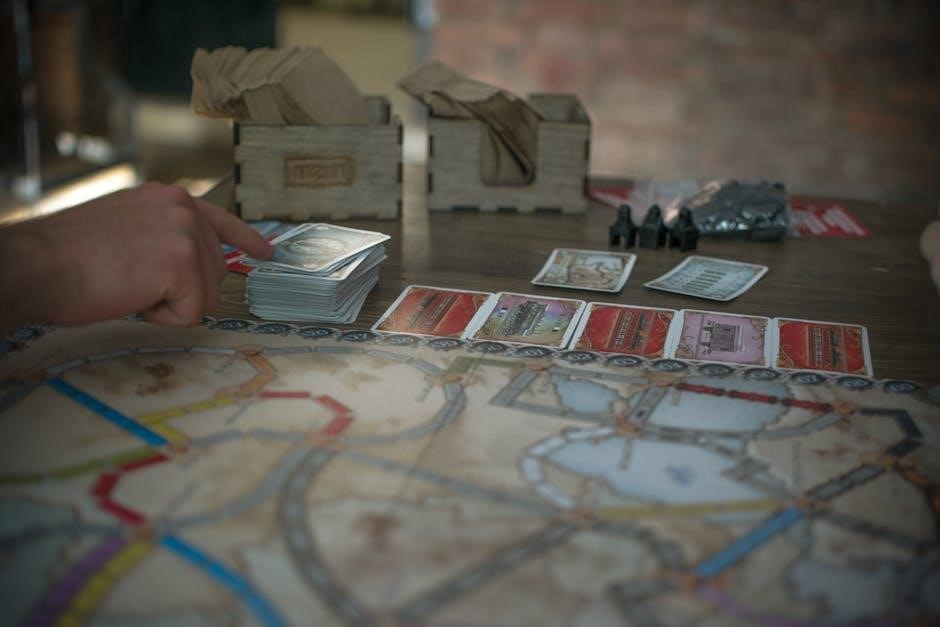
The dealer shuffles and distributes the cards equally among players, placing the trading bell in the center. Each player receives an equal number of cards, ready to begin trading.
4.1 Choosing the Dealer
Selecting the dealer is the first step in setting up the game. The dealer can be chosen randomly or by mutual agreement among players. Once the dealer is chosen, they take charge of shuffling the deck and distributing the cards evenly among all players. The dealer’s role ensures the game starts fairly and efficiently. After shuffling, the dealer places the trading bell in the center of the table, signaling the start of the game. This setup process is crucial for a smooth and organized gameplay experience.
4.2 Shuffling and Distributing Cards
After selecting the dealer, they thoroughly shuffle the deck to ensure randomness. The dealer then distributes the cards equally among all players, ensuring each player receives the same number of cards. This step is crucial for fairness. Once the cards are dealt, players review their hands, and the trading bell is placed in the center. The dealer’s role in shuffling and distributing cards ensures the game starts evenly, allowing players to focus on trading and strategy. This process sets the stage for a competitive and balanced game experience for everyone involved.
4;4 Placing the Trading Bell
The trading bell is placed in the center of the playing area before the game begins. This bell serves as a key element in initiating trades. Once the bell is in place, players can ring it to signal their readiness to trade, ensuring all players are aware of potential deals. The bell’s placement is crucial for maintaining order and facilitating smooth gameplay. Its central location allows easy access for all players, making it a focal point during trading rounds. Proper placement ensures the game flows efficiently and fairly for everyone involved.
Core Gameplay Mechanics
Trading cards, using the trading bell, and laying off cards are central to gameplay. These mechanics drive player interactions, strategy, and the pace of the game.
5.1 Trading Cards
Trading cards is the heart of the Pit Card Game, where players exchange commodities to complete sets. By calling out the number of cards they wish to trade, players negotiate deals. The trading bell signals active trading, allowing players to swap cards to corner the market. Strategic trading requires skill and attention, as players aim to collect all cards of one commodity. This dynamic mechanic fosters excitement and competition, making each round unpredictable and engaging for all players involved in the game.
5.2 Using the Trading Bell
The trading bell is central to initiating and managing trades in the Pit Card Game. Players ring the bell to signal the start of trading, allowing them to exchange cards with others. The bell is placed in the center by the dealer before the game begins. When rung, it opens the floor for negotiations, enabling players to call out the number of cards they wish to trade. Strategic use of the bell is crucial, as excessive ringing can reveal too much about a player’s hand, potentially aiding opponents. It’s a key tool for maintaining game flow and fostering competitive interactions.
5.3 Laying Off Cards
Laying off cards is a strategic move in the Pit Card Game where players discard unwanted cards to improve their hand. This action typically occurs during trading rounds, allowing players to eliminate lower-value or duplicate cards. Properly laying off cards requires careful planning, as it can both help manage your hand and influence other players’ decisions. Effective use of this mechanic can prevent holding too many cards and keep the game dynamic, ensuring players stay competitive and focused on their goal of cornering the market.

Winning the Game
Winning requires completing a corner by collecting all cards of one commodity. The round ends, and the player with the most corners is declared the winner.
6.1 Completing a Corner
Completing a corner in the Pit Card Game involves collecting all the cards of one specific commodity, such as wheat or barley. Once a player achieves this, they immediately end the trading round by ringing the bell. The player with the completed corner earns a point, and the round concludes. This demonstrates strategic trading and quick thinking, as players must balance acquiring the needed cards while disrupting others. Completing a corner is the ultimate goal, showcasing mastery of the game’s mechanics and market manipulation.
6.2 Ending the Round
A round ends when a player completes a corner, immediately stopping all trading. The player who achieved the corner rings the bell and scores a point. The dealer then collects all cards, shuffles, and redistributes them evenly among players. This reset ensures a fresh start for the next round. Ending the round promptly maintains the game’s pace and fairness, allowing everyone to begin anew with equal opportunities to succeed. Properly ending the round is crucial for maintaining the game’s structure and ensuring all players remain engaged.
6.3 Declaring the Winner
The winner is declared when a player successfully corners the market on a commodity, achieving a complete set. The game concludes with the announcement of the winner, who receives recognition and celebration. Points are tallied, and in case of a tie, a playoff round determines the final winner. The player with the most corners or points at the end is crowned the champion, showcasing their strategic prowess and trading skills. This concludes the game, rewarding players for their efforts and strategic decisions throughout the rounds.
Advanced Strategies
Mastering the Pit Card Game involves strategic planning, timing trades, and reading opponents. Advanced players use bluffing, strategic card holding, and calculated risks to outmaneuver competitors, ensuring victory through precise plays and market manipulation.
7.1 Managing Your Hand Effectively
Effective hand management is crucial in Pit. Keep a balanced mix of commodities to avoid overextending in one area. Regularly assess your cards to identify gaps and prioritize trades. Hold high-value cards strategically, and avoid holding too many low-value ones. Timing your trades wisely ensures you maintain control and flexibility. By organizing your hand thoughtfully, you can adapt to market shifts and increase your chances of cornering the market efficiently.
7.2 Reading Other Players
Observing other players’ behaviors and strategies is key to success in Pit. Pay attention to their trading patterns, body language, and eagerness to exchange cards. Identifying who is likely to trade specific commodities or who may be close to cornering a market can give you an edge. Adapt your strategy based on their actions, and avoid revealing your own intentions. By staying attentive and analytical, you can anticipate their moves, negotiate better trades, and strategically outmaneuver them to achieve your goals.
7.3 Timing Your Trades
Mastering the timing of your trades is crucial in Pit. Knowing when to hold onto a card and when to trade it can significantly impact your chances of winning. Players should avoid trading too early, as this may reveal their strategy. Instead, wait for the right moment when the market demand is high. Creating urgency by signaling readiness to trade can pressure others into making hasty decisions. Timing your trades strategically allows you to secure better deals, outsmart opponents, and move closer to cornering the market effectively.
Common Mistakes to Avoid
Avoid overtrading, as it can lead to unnecessary losses. Ignoring the trading bell is another mistake, missing key opportunities. Holding too many cards can overwhelm your strategy.
8.1 Overtrading
Overtrading is a common mistake in the Pit Card Game, where players trade excessively, losing control of their strategy. This can lead to unintended card losses and a diluted focus on cornering the market. To avoid this, only trade when it directly benefits your goal. Be cautious of unnecessary swaps, as they may undermine your progress. Review each trade’s impact and prioritize patience. By being selective, you maintain better control over your commodities and increase your chances of winning;
8.2 Ignoring the Trading Bell
Ignoring the trading bell is a critical mistake in the Pit Card Game, as it disrupts the flow of trading and can lead to missed opportunities. The bell is essential for initiating trades and maintaining order. Failing to use it properly can result in confusion and unfair play; Always ensure the bell is used to signal trades, allowing everyone to participate fairly. Neglecting this rule can throw off the game’s balance and reduce your chances of cornering the market effectively.
8.3 Holding Too Many Cards
Holding too many cards is a common mistake that can hinder your progress in the Pit Card Game. It limits your ability to trade effectively and slows down your chances of cornering the market. Excess cards can make it difficult to focus on the commodities you need, leading to missed opportunities. Always aim to manage your hand size strategically, ensuring you have enough flexibility to trade without becoming overwhelmed. This approach keeps the game dynamic and increases your likelihood of success.
Variations of the Game
The Pit Card Game offers exciting variations, such as team play, custom rules, or removing specific cards, allowing players to tailor the experience to their preferences.
9.1 Basic Game Without Bull and Bear Cards
The basic version simplifies the game by removing Bull and Bear cards. Players focus on cornering the market on specific commodities. Ideal for beginners, this variation removes complex elements, allowing players to master trading mechanics before introducing advanced features. The game remains dynamic, with the trading bell still central to negotiations. It’s a great way to learn the fundamentals without additional card effects. Typically, 3 to 8 players can enjoy this version, making it accessible and straightforward while retaining the core excitement of the original game.
9.2 Team Play
Team Play introduces a collaborative twist, where players form groups to achieve market dominance together. Each team coordinates strategies, shares resources, and works collectively to corner specific commodities. This variation enhances social interaction and strategic planning, as teammates must communicate effectively to succeed. Teams can divide tasks, with members focusing on different commodities, making it easier to track and trade efficiently. The dynamic encourages camaraderie and shared celebration of victories, adding a fresh layer of fun to the classic game while maintaining its core competitive spirit.
9.3 Custom Rules
Custom Rules allow players to tailor the game to their preferences, creating a unique experience. Groups can modify trading limits, introduce silent trading, or add special mechanics like “trading freezes.” Some players double the number of cards per commodity, increasing complexity. Others set time limits for rounds or penalize hesitant traders. These variations keep the game fresh and exciting, offering endless possibilities for creativity and strategic adaptation while maintaining the core objective of cornering the market, ensuring no two games are ever the same.
Tips for Beginners
Start with basic rules, focus on understanding trading mechanics, and observe experienced players. Pay attention to others’ strategies and manage your hand wisely to succeed early.
10.1 Starting with the Basic Rules
Begin by removing the Bull and Bear cards to simplify gameplay. Focus on understanding the core mechanics of trading and cornering the market. Start with fewer players to reduce complexity and allow time to grasp the basics. Pay attention to the trading bell and how it initiates exchanges. Keep your hand organized and prioritize collecting sets of the same commodity. Avoid overcomplicating early trades and focus on building a solid foundation before introducing advanced strategies or additional rules.
10.2 Practicing with Fewer Players
Starting with fewer players simplifies the game and allows new players to focus on basic mechanics. With 2-3 players, the pace is slower, making it easier to track trades and strategies. This setup reduces confusion and lets beginners understand how to corner the market effectively. It also minimizes distractions, helping players concentrate on their hands and the trading bell. Practicing with fewer players builds confidence and prepares them for the fast-paced environment of a full game.
10.3 Observing Experienced Players
Watching experienced players is an excellent way to learn the game’s nuances. By observing their strategies, you can gain insights into effective trading, timing, and decision-making. Pay attention to how they manage their hands, use the trading bell, and corner the market. This helps you understand the game’s flow and common pitfalls to avoid. Observing also allows you to see how experienced players interact and negotiate, which can enhance your own gameplay and confidence. Learning from others’ techniques can accelerate your improvement and make the game more enjoyable.

Etiquette and Sportsmanship
Respect fellow players, follow rules, and maintain a positive attitude. Avoid unsportsmanlike behavior to ensure an enjoyable experience for all participants.
11.1 Respecting Other Players
Respecting other players is crucial for a positive gaming experience. Always maintain a positive and considerate attitude, avoiding disruptive behavior. Be mindful of others’ feelings and opinions, fostering a friendly environment. Express gratitude for their participation and engage in respectful communication. Avoid mocking or belittling others, even in jest. Focus on mutual enjoyment, ensuring everyone feels valued and included in the game.
11.2 Avoiding Unsportsmanlike Behavior
Unsportsmanlike conduct can ruin the game’s enjoyment for everyone involved. Avoid actions like cheating, lying about cards, or intentionally stalling the game. Refrain from making false accusations or blaming others for mistakes. Do not gloat over wins or mock losses, as this creates a hostile atmosphere. Players should always adhere to the rules and maintain fair play, ensuring a positive experience for all participants. Remember, the goal is shared enjoyment, not personal gain at the expense of others.
Resources for Learning
Explore official rulebooks, online tutorials, and community forums to deepen your understanding of the Pit Card Game. These resources provide detailed guides, strategies, and tips for mastering gameplay.
12.1 Official Rulebooks
Official rulebooks are essential for understanding the Pit Card Game. They provide detailed instructions, including setup, gameplay mechanics, and winning conditions. These rulebooks are often included with the game or available online. They cover topics like dealing cards, using the trading bell, and cornering the market. Players can refer to these guides to clarify rules and resolve disputes.
Rulebooks ensure everyone plays fairly and consistently, making the game more enjoyable for all participants. They are a valuable resource for both newcomers and experienced players.
12.2 Online Tutorials
Online tutorials are an excellent way to learn the Pit Card Game. Websites and platforms like YouTube offer step-by-step guides, gameplay demonstrations, and strategy tips. These resources are ideal for visual learners, breaking down complex rules into easy-to-follow instructions. Many tutorials cover setup, trading mechanics, and winning conditions. They also provide tips for beginners and advanced players, helping everyone improve their skills. Online tutorials are accessible anytime, making them a convenient way to master the game at your own pace. They complement official rulebooks and community forums, enhancing your learning experience.
12.3 Community Forums
Community forums are invaluable for Pit Card Game enthusiasts, offering a space to discuss strategies, ask questions, and connect with other players. These forums often feature detailed discussions about rules, variations, and advanced techniques. Players share their experiences, providing insights and tips for improving gameplay. Additionally, forums allow users to clarify confusing rules and gain feedback from experienced players. They serve as a hub for fostering a sense of community and collaboration, making them an essential resource for both newcomers and seasoned players seeking to enhance their skills and knowledge of the game.

Troubleshooting Common Issues
Common issues like unclear rules or card disputes can arise. Resolving these promptly ensures smooth gameplay. Address lost or damaged cards by replacing them fairly to maintain game integrity.
13.1 Resolving Disputes
Disputes often arise over card interpretations or trading rules. To resolve them fairly, review the official rules together. If unclear, appoint a neutral player as the final decision-maker. Ensure all players agree to the resolution to maintain harmony. Keeping the game enjoyable is key, so address issues promptly and respectfully. If needed, pause the game to discuss and clarify. Open communication and mutual understanding help prevent ongoing conflicts, ensuring smooth gameplay for everyone involved.
13.2 Handling Lost or Damaged Cards
If a card is lost or damaged, replace it with a spare from the deck. If no extras are available, remove the corresponding card from play. Ensure all players agree to the substitution to maintain fairness. Regularly check the deck’s condition and replace worn cards to prevent issues. Keeping the deck complete ensures smooth gameplay and prevents disputes over missing or unreadable cards, allowing everyone to enjoy the game without interruptions or unfair advantages.